Sci-fi Writers Who Envisioned the Future

 Science fiction writers have a long tradition of envisioning the future and its technology that later becomes scientific fact.

Take Jules Verne. In his 1870 novel, 20,000 Leagues Under the Sea, he imagined an underwater ship powered by electricity. American inventor Simon Lake was inspired by the novel and invented his own submarine, the Argonaut, in 1888.

Verne’s novel, From the Earth to the Moon, published in 1865, described the details of a space capsule that in 1969 sent astronauts to the moon – the Apollo 11. He stipulated how long the flight would last, that it would be launched from Florida, and its splashdown in the ocean. He also described light-propelled spacecraft now known as solar sails. And keep in mind that Verne was living in the time of the Civil War.

Verne isn’t unique. Throughout history, numerous examples exist of how writers, artists, movie makers, and others in creative professions depicted inventions and details about future events that they realistically had no way of knowing. But Verne, as a science fiction writer, holds one of the top prizes in this regard.

Edward Bellamy is probably best known for his 1888 Looking Backward, a utopian novel set in Boston in 2000. In the story, the U.S. is a socialist country that exists in a spirit of cooperation and brotherhood – not exactly what life is like in the 21st century! However, the people in his utopia carry cards that allow them to make purchases without cash. Sounds a lot like a debit card!

Robert Heinlein’s most famous novel was probably Stranger in a Strange Land. But like many writers, he started out writing short stories. In 1941, he published Solution Unsatisfactory in Astounding Science Fiction, about a future world where the U.S. develops an atomic weapon that ends WWII. This event launches a nuclear arms race. The story was written before the U.S. entered WWII and five years before the bombing of Hiroshima and Nagasaki.

When Ray Bradbury wrote Fahrenheit 451 in 1953, portable headphones already existed, but they were huge, ugly, and weighed a lot. He described “little seashells…thimble radios…” that fit in a person’s ears. Sounds a lot like earbuds, right? And they didn’t come into wide use until 2000.

Then there’s the 1969 novel Stand on Zanzibar by John Brunner. It takes place in 2010, a man named Obami is president, terrorist attacks and school shootings are rampant, cell phone video chats are a favorite way to communicate, cars are powered by rechargeable electric fuel cells. People are skipping marriage in favor of short-term hookups. And then there’s Detroit – a wasteland that has developed electronic music.

William Gibson’s novel 1984 Neuromancer predicted the world wide web, virtual reality, cyberspace, and hacking a decade before the internet existed as it does today.

In May 1982, Stephen King published Running Man under the pseudonym Richard Bachman. The story is set in the U.S. in 2025. Life is a Dystopian nightmare, the economy is in ruins, and Ben Richards, the protagonist, is desperate. He’s unemployed, his daughter is gravely ill, and his wife turned to prostitution to help pay the bills. He undergoes rigorous training so he’ll be chosen to participate in The Running Man, Games Network’s most lucrative show. He’ll be hunted by the network’s elite killing team and if he manages to survive 30 days, he’ll win $1 billion.

In 1987, the novel became a movie starring Arnold Schwartenegger. In September 1989, a TV reality show, American Gladiators, premiered that bore some uncanny parallels to The Running Man.

 Remember George Orwell’s classic book 1984? He was way off on the dates, but in January 2017, when Trump assumed the presidency, George Orwell’s 1949 novel appeared on the bestseller list. In Orwell’s post-nuclear dystopian state, everything was monitored by an interconnected web of security cameras. In the 21st century, video surveillance is a part of everyday life, and individuals can be tracked through GPS.


These examples are just a small cross section of science fiction novels that presaged the future. Did these writers, through their creative endeavors, dive into the archetypal well of ideas where time doesn’t exist? When novelists are plugged into their stories and characters, they envision the inventions, gadgets, society and government they describe. To write with such specificity, your imagination is jammed into  high gear and you have to see what you’re describing.


Posted in synchronicity | Tagged , , , | 3 Comments

A New Way to Fly

It’s called iFly and you suit up with a helmet and an instructor and enter a wind tunnel and experience a kind of skydiving. That’s Rob way up there with the instructor.

Megan and I gave this to Rob for an early birthday present. He and Megan went, I took photos. But this looked like such fun that my turn is next!

I couldn’t get the videos up here, but I’ll keep trying!

Happy birthday, Rob!


Posted in synchronicity | Tagged | 13 Comments

Uranus into Taurus

Okay, May 15 is an astrological biggie. The planet Uranus enters earth sign Taurus. It was last in this sign between 1934-1942.

Uranus is a fascinating planet in the astrological scheme of things. It rules Aquarius, genius, individuality, earthquakes, inventions, the Internet, the sudden and unexpected, electronics, technology, the future. It’s about the visionary, the unimagined, the surprise that hits you out of the blue. Its job at a personal level is to shake us out of our ruts and routines, so everything that no longer serves us falls out of our lives, making space for the new.

From May 15-November 6, it’s in Taurus, then the planet turns retrograde and on March 6, 2019, it enters Taurus again and will remain there until 2026. So the 6 months between that May date and November, you‘ll get a taste of what this transit will mean for you.

Here’s why you should pay attention to this transit. On March 11, 2011, when Uranus entered warrior archetype Aries, Japan experienced a 9.0 quake that triggered a tsunami that resulted in the meltdown of nuclear reactors at Fukushima. It was a tragically literal manifestation of that planet in that sign and the Uranian energy at work.

Taurus rules beauty, art, money, stability, endurance, sensuality, physical pleasures and material goods. It’s one of the most stubborn and rigid signs in the zodiac and the energy of Uranus, by contrast, is the most disruptive. You can see how this transit may not be a total picnic. That said, though, at the end in 2026, you’ll look back and think one of two things: OMG, it’s over or What an incredible adventure!

 Globally, the financial markets may be rattled, shaken up. Your IRA, the value of your home, your services, your products, may plunge – or soar. Which it is depends on where Taurus is in your natal chart, how well you deal with change, and – most of all – your mental and emotional attitude toward abrupt change and life in general.

The volcanic eruptions in Hawaii may be an early indication of Uranus entering earth sign Taurus. Tunde Atunrase, a Facebook friend and author who wrote a book about remote viewing, notes that in 1998, remote viewer #001 Joseph McMoneagle predicted this.

“If you live in Hawaii or know anyone who does, here’s some professional remote viewing news you might want to pass on. This was a double blind remote viewing prediction published in 1998 by remote viewer #001 Joseph McMoneagle”

“’There will be significant volcanic action in the Hawaiian Islands between 2014 and 2023, resulting in the abandonment of a now-occupied island.”

This prediction can be found on page 212 of Joe’s book The Ultimate Time Machine.

Abandonment is a strong word and although Joe’s timing on this prediction is a bit wide, this isn’t unusual when psychics make predictions about anything. At the moment they are making their prediction, they’re seeing what’s most probable, based on the free will that we exercise as individuals and as a collective.

On the same day, at 7:48 a.m. EDT, there’s a new moon in Taurus, which spells new opportunities, new doors opening. Both powerful Pluto and energetic Mars will form beneficial angles to this new moon, so it’s going to be an exciting and surprising time. Less than 4 hours later, Uranus slips into Taurus – and that’s where life gets really interesting.


Posted in synchronicity | Tagged , , | 12 Comments

MINCA

Minca, Colombia. Ever heard of it? We hadn’t. But several years back, Travel & Leisure called it “the undiscovered gem of Colombia.” If you Google it, a variety of links appear that provide different perspectives on this little mountain village. And yes, airbnb is there.

Apparently, up until around 1996/1998, life in this region was relatively peaceful. Then the guerillas and paramilitary moved in, a war over the drug trade. Weed flourishes here. For a long time, guerilla warfare raged and no one was allowed into the place. Then, in 2006/2007, the government reached some sort of agreement with the guerillas and now, in 2018, the town is a backpackers paradise.

I’m not a backpacker. I love my creature comforts. And when I found Las Piedras on airbnb’s website, the photos looked terrific and I booked it. A private bungalow large enough to sleep four. The reviews were good.

Getting there from Cartagena, where we landed and spent our first night, isn’t complicated. But it’s takes about 4-5 hours, depending on stops, along some bumpy roads. Our transportation was through MarSol, a Colombian outfit with a small army of air conditioned vans that seat about 20 people. The price is reasonable – 50,000 Colombian pesos or about $18. The van made two stops for restroom breaks and a bite to eat.

There’s no MarSol van directly to Minca, only to Santa Marta, about 15 miles farther up the northwestern coast of the country. From there, you have to backtrack in a taxi for another $18-$20, up and down mountain roads.

Minca itself is an odd place of dirt roads and flourishing restaurants, cafes, hostels, stray cats and dogs and people. You can tell the place is racing into the tourist track and that someday in the not too distant future the roads may be paved, the place may be totally civilized. But right now, it’s like a slice of the old west – minus the guns. And there’s WiFi!

Once you leave town and start up a mountainous side road, it’s questionable whether the taxi will make it. Ours didn’t. We were left off outside a hostel, Casa Relax, and walked down a winding, very steep path with our bags to Las Piedras. And wow! That trek was worth it every time we made the journey.

The house backs up to a river filled with giant rocks and boulders and waterfalls. The noise of that waterfall becomes your backdrop, a white noise that’s always with you, a soothing sound that follows you into sleep and wakes you at dawn. The house itself is owned by a Colombian women, Vanessa, and her cousin, who live in Miami, and her mother, the artist who endowed the place with so much beauty. The place is almost beyond description.

Las Piedras is a place where you live in the present tense. Artistic touches are everywhere. The stone shower is to die for. I love the inlaid tile butterfly in the kitchen floor, the beautifully equipped kitchen, the tile creatures that grace the bedroom wall, the comfy hammock strung up in the front room, the tiered screen porch, with the comfortable furniture, the path that leads outside.

We even have a mother duck at the end of the property sitting on eggs, her nest overlooking the river. If there’s a writers’ paradise, this is it. And we don’t have our computers.

But we have WiFi and our iPhone cameras.

At night, the trek back from town is challenging, we need flashlights. But during the day, wow. Easy walk to the Lazy Cat, a restaurant that backs up to woods and the river and serves great food. And it has WiFi. Here’s some street art on the walk to town.

The Lazy Cat cafe

There are several markets that sell basics – water (about 70 cents a bottle), eggs (local and cheap) beer (cheap), wine (less cheap), yogurt (cheap and local and delicious), mangos and papaya (cheap), Colombian cheese (fantastic and cheap). There’s also a French bakery in town that has the BEST coffee and freshly made bread so good it melts in your mouth.

The people are friendly, the tours are inexpensive. We went to a coffee plantation that cost 7 bucks for a tour that was fascinating and informative. Getting there involved an inexpensive ride on a moto (motorcycle), one of the biggest industries in Minca that’s run entirely by locals, and an uphill 20-minute hike in the heat. It was worth it, especially at the end when we met a gorgeous toucan.

Minca is a special place.

Get there before Starbucks and Home Depot move in.

Posted in synchronicity | Tagged , | 7 Comments

‘A little elevation’


A trickster levitator in Cartagena, Colombia

One of the poses I often teach in my yoga class is called the butterfly. You sit up with the bottom of your feet together, knees out to the sides. You hold onto your toes and move your knees up and down like wings of a butterfly. After fifteen or twenty seconds, I sometimes say, “Okay, now pick up speed, and maybe a little elevation.”

That’s the same thing as saying, “Start levitating now.” It’s a joke, of course. I don’t expect any of my students to levitate. If someone did, I would say, “Okay, you teach the class and show me how to do that!”

However, levitation apparently is something more than we can just do in our dreams. One of the most documented stories about levitation was the case of a Catholic priest, who was observed levitating many times by many people. He wasn’t a yogi, either. His name was Joseph Desa and he was born in Copertino, Italy in 1604. Like most people of his time, he lived in poverty and under the thumb of the Catholic Church, which dominated life in 17th century Europe.

At age nine, Joseph contracted an infection that led to gangrene. He was crippled and bedridden for five years. Finally, a hermit, known for his surgical skills, operated on the boy and amazingly (for that era) he survived. But Joseph was uneducated and socially isolated and often fell into trances, especially when he heard church music. His head would drop back and his jaw would go slack, resulting in his nickname, “Boccaperta” (gaping mouth).

In spite of his lack of social skills, by age 25, he was ordained a priest and his unusual abilities as a prophet and healer grew. Not not only was he capable of telepathy, precognition and power over animals and natural forces, but while leading mass he had the habit of levitating, which startled and disturbed his congregation.

As a result, the Church moved him from parish to parish to avoid controversy, and the attention of the Inquisition.  But soon the inquisitors took an interest in the  priest and his supernatural abilities. He was put on trial by the Inquisition and ordered to say mass for the inquisitors. He did so, and levitated  in front of the Inquisition. Amazingly, he escaped being burned at the stake, and simply received a stern warning.

However, he couldn’t control his abilities and when he continued to levitate, He was tried again by the Inquisition. He was found guilty  and put under house arrest for the rest of his life, a modest sentence considering he lived during the peak years of the Inquisition. No doubt his life was saved by the fact that he wore the Church vestments as an ordained priest. A century after his death he was canonized by Pope Benedict XIV as St. Joseph. In vetting the new saint, the Vatican amassed 13 volumes of information about him that remains in the Vatican archives to this day.

Joseph spent 16 years at the Grotella Convent near Copertino. During that time, he was observed levitating 70 times by numerous witnesses. Here’s one example from the book,  The Man Who Could Fly, by Michael Gross.

”April 30, 1639: After stepping inside the Church, Giuseppe (St. Joseph) glanced at a painting of the Holy Virgin located in the vault above the wooden frieze of the altar of the Immaculate Conception, a Madonna painted with the Baby Jesus in her arms in a way that strikingly resembled the Madonna of the Grotella Convent. At the sight of her, Padre Giuseppe gave a huge scream and flew about thirty meters in the air and, embracing her, said, ‘Ah, Mamma mia!and, embracing the her, said, “Ah, Mamma, you have followed me!” It all happened so quickly that those present were filled with sacred terror, marveling to each other , and remaining in a stupor over the Padre’s performance.”

Grosso is convinced that the stories are true and said that during Joseph’s live thousands of people witness the levitating  priest. So it seems, levitation is possible. After all, it only takes one person rising from the floor without trickery to prove  that humans can fly.


Posted in synchronicity | Tagged | 9 Comments

The House above the Waterfall

International travelers are often in search of that special place, that undiscovered idyllic village in the mountains or on the sea. But with the expansion of such travel over the decades, those sort of places have gradually disappeared as they become ‘discovered’ first by adventure travelers and then the tourist crowds. They often become places you don’t want to go unless you want to be surrounded by your fellow compatriots and other foreign travelers and throngs of tourists.

Tulum in Mexico back in the ‘70s and early ‘80s was one such special getaway for the adventure-minded tourists. It was a tiny beach village with a Mayan fortress near the eastern tip of the Yucatán. The town was so small and isolated, there was no electricity. The shops were mostly thatched huts lit by kerosene lamps after dark. While there was a basic hostel or two for travelers, I (Rob) chose to rent a thatched hut with a cot on the beach for $1 a night. Those days are long-gone for Tulum, which is now a crowded tourist stop nearly rivaling the famed pyramid attraction of Chichen Itza.

So when we heard about the mountain of village of Minca, Colombia that was only discovered by adventure travelers a few years ago, we took an interest. The village is located less than an hour’s bus or taxi ride from the overdeveloped beach city of Santa Marta. We were encouraged when we mentioned it to one of our Colombian friends in Florida, who said she had never heard of it. That was actually good news! The reason that it had been off the travel route was that for years the village was controlled by FARC, the now mostly defunct revolutionary army that was fighting government forces and hiding in the Santa Marta Mountains…and elsewhere. Once a peace treaty had been reached and the village was no longer a dangerous place to venture, things started to change. By 2006 or 2007, Minca started attracting adventure travelers, who discovered a hidden paradise.

We were lucky to find a great Airbnb house outside of Minca that was owned by a Colombian woman who lives most of the year in Miami. Not only was the house beautifully decorated and roomy, but it was situated right above a river with a waterfall visible from the porch. In the afternoon, a few tourists and locals would find their way along the river to swim in the pool near the waterfall.

We stayed there three days, then took a bus along the Caribbean coast back to Cartagena where we began the trip. Sitting in front of us on the bus ride was a couple and their ten-year-old son from San Juan Island off the coast of Washington State. As they talked about their time in Minca, they mentioned a visit to a waterfall, which they really enjoyed, and said they were fascinated by the house above the waterfall and wondered who lived there.

It was us! We told them. At least, we were the residents at the time of their visit. We must’ve taken a walk to town, about 15 minutes away, during the time of their visit. They were of course surprised at the coincidence. The woman, who is director of a non-profit group, said there was a word for that. We told her it’s synchronicity! Her husband, a lawyer, said: “Serendipity.” Well, maybe both.

Posted in synchronicity | Tagged , | 4 Comments

Cartagena’s Inquisition Palace

The Inquisition Palace is one of the more bizarre museums in Cartagena. It documents a dark pocket in Colombia’s history similar to the Salem witch-burning era in this country.

According to an historical plaque on the first floor of the building – the one in the image above – the inquisition began in Europe in the early part of the 12th century, which the Catholic church imposed and used as a tool to confront heresy. It was called The Holy Office: Identification of the other.

Between 1231-1233, Pope Gregory IX conferred legal status on this institution. In 1478, under the reign of Castilla and Aragon, with authorization from Pope Pius IV, the inquisition was formally established in Spain. And from there, it made its way to Colombia. Here’s an artist’s rendition of what the cells were like.

The usual suspects were persecuted – anyone who practiced divination, astrologers, people suspected of practicing black magic, anyone who was different than the norm.  The accused sat on this block of rock in an open courtyard for judgement.

What I found particularly disturbing about this museum was the instruments of torture that were used. Take a look at this collar. Imagine how this would feel around your neck.

Or this sucker. Move your head and the device penetrated your throat.

In one of the courtyards, a guillotine and a noose were displayed.


One of the tourists, a woman, actually went over to the guillotine and stuck her head in that opening between the base and the blade, then also went over to the noose and fitted the rope around her neck. Death wish, lady?

To wander through a place like this, you have to detach emotionally and regard it as some awful period of history. I want to believe humanity has evolved beyond horror like this, but we haven’t.  Our forms of torture today are just different – waterboarding at Gitmo, chemical weapons in Syria, economic deprivation, nukes. And I suppose that’s the importance of museums like this, reminders of our capacity for needless cruelty.

And look at the woman the trump admin has nominated for head of the CIA – Gina Haspel, who oversaw the black sites during the Bush years that ran the waterboarding torture program. Sorry, but this country’s ideals don’t include torture or those who perpetrate it. Bye, Gina.

Posted in synchronicity | Tagged , , | 8 Comments

Like Magic!

Scott Colborn –

Here’s an interesting synchro- a case of someone’s thoughts manifesting instantaneously in the physical world. Like magic. It comes from our friend Scott Colborn, who hosts a radio show out of Lincoln, Nebraska called Exploring Unexplained Phenomena. On our last appearance on his show, we talk about synchronicity and so he has sent us one that recently occurred to him. Besides his radio show, Scott also teaches guitar lessons at Dietze Music Briarhurst and that’s where the synchro occurred.

“I had just finished several lessons and had a brief time to eat lunch and then teach more lessons. I had checked my voice mail on my phone and realized that it was about full, so I deleted some old messages. I came across a message from my friend and guitar student Joe B, who had left a message about a month ago saying that he was suspending lessons for awhile.

“I felt my intuition say that I should call him – so I did. I left a voice mail for him, wishing him well and saying that I hope that he was continuing to play guitar and find joy in that. I ended the call, put my phone in my pocket and walked up front.

“Drake, one of the sales associates at Dietze, walks up to me and gives me a note, saying that Joe B. had just stopped in and signed up for lessons starting in May. Realizing immediately the synchronicity happening, I showed Drake my time stamp of 1:19 pm on my phone message to Joe B, and Drake said that he had just left the store. I figured it was almost simultaneous. I saw Joe B in the parking lot so I went out and greeted him and told him about the phone message (he hadn’t had a chance to listen to it) happening at about the same time as his visit to the store to sign up for lessons again. We both had a good laugh and I felt really filled with joy – which for me is what happens when I’m conscious of a synchronicity happening.

“A close-minded skeptic might say that somehow I heard a familiar voice (from the front of the store all the way back into my small classroom at the other end of the store) and that was what prompted me to call. I did not hear Joe B’s voice, nor was I aware that he was in the store at that time by any auditory or visual clue. I was following my intuition, which said to call Joe B.

“When we open up to the world and people around us, amazing things can occur. These more-than-casual coincidences happen in each of our lives – most of the time we are unconscious to them. What they tell me is that miracles happen – and miracles are not as scarce as we might believe.”

Scott added and old saying: “If you believe so – so. If you believe not so – not so.”

I believe.


PS. I had moved around some posts and didn’t know this post that Rob wrote was about Scott. So, there’s a synchro here, too, because it got moved to May 5, the day we’re on his show!

Posted in synchronicity | Tagged | 2 Comments

#18, Watergate, trump


History often provides us with stunning parallels to current events that involve numerical phenomenon – clusters of numbers.

In early May 2017, Trump had been in office for about five months and the parallels between his administration’s Russia scandals and those of the Nixon administration and Watergate already were becoming more apparent. One focal point was the number 18.

In Watergate, an 18-minute gap in a recording resulted in Nixon’s impeachment and resignation. In the Russian investigation with this administration, it took Trump 18 days to fire National Security Advisor Michael Flynn after he was warned by acting Attorney General Sally Yates that Flynn might be easily blackmailed by the Russians.

On May 18 of last year, we learned from Reuters and the New York Times that there were at least 18 undisclosed contacts between members of the Trump administration and the Russians. That adds up to four clusters of the #18.

The first two instances of 18 solidified the tie to Nixon and Watergate. I felt it underscored what many people already suspected – that a cover-up was involved about Russia’s interference in our 2016 election. I also figured there would be other instances of 18 – and there were, revealed on May 18, 2017. With this second set of 18s, I felt the cluster might just be getting started, warming up. So I posed a couple of questions to the quantum synchro gods who orchestrate this stuff:

Will at least 18 people in the Trump administration be indicted for their collusion with the Russians? (In Watergate, the casualties were two resignations -prez and VP – and 48 others who were indicted and jailed.)

Does 18 refer, perhaps, to a day of a month when the full truth is known?

Will Trump continue as president for another 18 days, weeks, or months?

Let’s say the 18 phenomenon is referring to Trump’s presidency lasting another 18 months from May 2017, when this number cluster came to our attention. That would put his end date at November 2018, the mid-term elections.

If the Democrats sweep the house, then it’s likely the mid-term elections will spell the end of his presidency through impeachment, indictment, or implosion, or all three. Stay tuned!

Posted in synchronicity | Tagged , , , , | 7 Comments

The 11:11 Synchros in Cartagena, Colombia

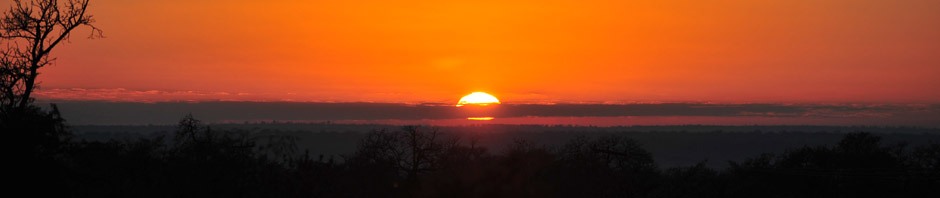
Sunset from the top of Cartagena’s wall

++

We ran across an interesting synchro involving 11s while we were in Colombia.

We were in Cartagena, a city on the country’s northwestern coast. We were visiting a couple of the museums – the Museo de Oro (museum of gold) and El Palacio de la Inquisicion (Palace of the Inquisition, which is just like it sounds, Salem witch stuff transported to South America). I know I snapped a photo of a plaque with some historical stuff on it, but I can’t find the picture. I’m not sure in which museum I saw the plaque. But here’s the history and the synchro:

At 11 a.m. on the morning of 11/11/1811, Cartagena became the second city in South America to declare its independence from Spain. This independence came after a decade of repeated sieges from Spain, and won Cartagena the title of “The Heroic City.”

And there is something truly heroic about this city, the oldest part of it completely encased within a wall. Inside that wall, Colonial buildings are everywhere and parts of it – the narrow roads, incredible street art, the music and shops – remind me of Havana. But in Havana, you can time travel as you walk the streets, moving from Colonial times to the late 1950s, early 1960s, when the U,S, embargo began. In Cartagena, time stopped somewhere in the 1600s and pop culture grew up around it.

It seems that everyone in this city, even kids, has a cell phone. The Internet is far better than anything in Cuba and WiFi can be found in most restaurants and cafes. But it feels like an odd dichotomy to walk through the city’s old, narrow street and see so many people scrolling through  their phones.

We used airbnb throughout our Colombian trip. Our first night, spent in Cartagena, we stayed in a centrally located spot in the Getsamania neighborhood inside the wall. We basically had a room (with AC, important in this very hot city!) but the apartment itself was open and comfortable, with a small pool.

It was  close to shops, cafes, restaurants, plazas. Everywhere, there was incredible street art, which gives you some idea of the artistic heart of this city.

And the magical sky at dusk was incredible!

The next day, we traveled to Minca, a village in the mountains, where we stayed for 3 glorious days. Minca turned out to be the gem on this trip. Stay tuned!


Posted in synchronicity | Tagged , , | 7 Comments