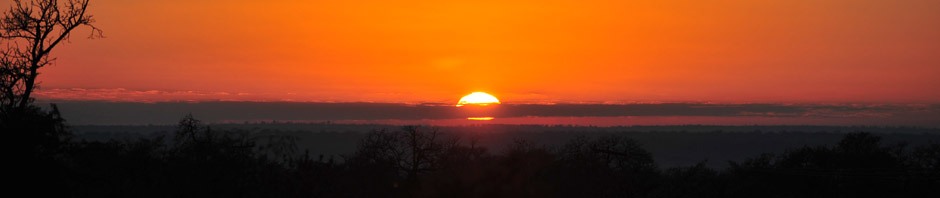
Nearly twenty-five years ago, on August 16-17, 1987, the Harmonic Convergence drew people from all over the world to supposed power spots on the planet. I remember that the evening news had a piece about Machu Picchu and the people who had gathered there to welcome the new energy that was allegedly being ushered into human consciousness. If memory serves, it got a brief mention on the evening news because actress, author and New Age proponent Shirley MacLaine believed it was important. The mention, I should add, was a kind of – Ha-ha, look at these weirdos.
I’m pretty sure the news piece mentioned Jose Arguelles and his book, The Mayan Factor, because Arguelles was credited with starting the first “globally synchronized meditation.”
So at dawn on August 16, 1987, Rob and I met our friend and psychic Renie Wiley on a Lauderdale beach with a whole lot of other weirdos to celebrate and welcome this new energy into the world. I remember thinking that I must be insane to be up before dawn and on a beach to watch the sun rise. I don’t do dawn. I’m an owl, always have been, and when I have to go to bed before eleven to get up at a certain time, I hardly sleep at all.
As I watched the sun punch a hole in the horizon that morning, I was sleep deprived, but also aware that something felt very different. Maybe it was the energy of the crowd, maybe it was the energy of whatever was rushing toward us. But I do know that something changed for me that day, something internal, a tectonic shift in beliefs. Two years and a few weeks after that dawn on the beach, Megan was born, we moved, our lives went through a complete revolution. Our writing changed, became more psychic, esoteric, and delved into the areas that interested us. It’s as if who Rob and I really are became more obvious, prominent, pervasive.
Now here we are, in 2012. I feel that same momentum, that same strangeness and yet a weird familiarity. The 5,126-year astrological cycle the Mayans knew about comes to end on December 21, 2012. There are some fascinating synchros involving the date, but the one that takes the cake, is that the Mayan calendar ends at 11:11 UT on December 21, 2012. The 11:11 element is something we’ve written about in our books and here on the blog. Think: portal, spiritual evolution, heightened awareness and psychic ability.
I look to astrology, since that’s what the Mayan calendar was based on, and, wondered what transits would signal Armageddon, the worst possible scenario, the end of life on earth. Well, I’m happy to report I just don’t see it.
The nearest approximation might be the financial meltdown in 2008 that has impacted the global economy ever since – the fallout of the Bush administration policies which have been extended, to some degree, by the Obama administration. While we have seen evidence of the mass paradigm shifting – the first black president, for instance, the acknowledgement that emotions are intimately tied to physical health, the advances in physics- we have also seen the physical evidence that triggers such paradigm shifts.
Natural disasters are on the rise. Rebellion and revolution are in the air we breathe. Climate change is a fact, not a theory, and it no longer matters, really, what’s causing it. It’s here, it’s real, and it’s going to impact every one of us, in some way.
Astrologically, we seem to be at the dawn of an era. Talk to Uranus about that. On March 11, 2011, it entered Aries, the sign of the warrior.
As the planet of sudden and unexpected change, it’s one of the slower moving outer planets, so its affect on our lives is greater than the inner planets that move more quickly – the moon, sun, Mercury, Venus, Mars. Uranus stays in a sign for seven years, but because of retrogrades won’t leave Aries until early March 2019. So, we’re talking eight years here. Eight years of massive, monumental change.
In many ways, I think Uranus defines humanity – we seek to individuate from our families and early childhood conditioning; at a certain age we rebel against the status quo; we learn that we are intuitive, unique, and we either reject or accept our individual power. On a collective level, Uranus awakens us. So, on March 11, 2011, the day that Uranus entered Aries, , a 9.0 quake in Japan triggered a tsunami that devastated a nuclear power plant.
I think this event defined the next seven years globally, collectively, for humanity. The world isn’t going to end, but for some of us, it will feel as if it has. We may experience personal loss and tragedy – but we’ll also experience unprecedented insights, psychic connections to people of like minds, and a profound grasp of how we, as individuals, not only fit into the larger picture, but help to define it
Uranus also rules the technology that unites us, that allows us to communicate instantly with friends on the other side of the world, with people we may have newer met whose beliefs parallel our own. Uranus governs the planetary empaths, individuals who are so attuned to the changes within the planet that they experience physical symptoms. I think they are a leap in our evolution, in our collective consciousness, a product of Uranus in Aries. Uranus governs rebellion and revolution and its impact is evident in the Arab spring, in the Occupy movement, in movies like The Ides of March, The Help, and Midnight in Paris.
Find out where Uranus lies in your natal chart, where Aries is, and that’s where you, as an individual, as one person, one voice, can make a significant difference. https://www.astro.com/cgi/chart.cgi
So, we don’t see the end of the world. But there’s sure going to be a lot of hype about it and the closer we get to the alleged end date, the stranger events will be. More natural disasters may come about as a result of global warming and the corporate hold on our lives. Thanks to trickster Mercury, the presidential election of November 2012 is probably going to be weird, unsettled, and will provide some insight into the hoopla surrounding 12/21/12.
But if we all stay true to who we are, do what we can to alleviate the suffering of others, take our cues from dreams, visions, synchronicity, and don’t compromise our individuality to fit into some collective idea of who we should be, we’ll come out on the other side as the whole, integrated individuals that we are. That’s our hope. That’s our conviction. As Jean Luc Picard used to say in the Star Trek sagas, the best line for visualization I’ve ever heard: Make it so.
https://en.wikipedia.org/wiki/Harmonic_Convergence
https://nctr.pmel.noaa.gov/honshu20110311/