Arenal volcano, Costa Rica & the view from our porch
The name means “rich coasts,” and yet on our trip to this country, we didn’t visit the Atlantic or Pacific coasts. We focused on the interior, around Arenal volcano, one of the ten most active in the world, the lake by the same name, and the area called Monteverde -green fields – otherwise known as the cloud forest. We had some odd synchros on this trip, and they fit right into the areas we chose to visit.
Originally, our family vacation this summer was going to be to Peru, to the stone forest outside of Lima, which we wrote about here. I even worked it into the ending of Ghost Key, the sequel to Esperanza. But when the gas prices began to rise, so did the airfares. When Miami-Lima hit more than $900 a ticket, that quickly removed the destination from our budget. So we opted for Costa Rica. It turned out to be exactly the right place.
The morning we left for our flight out of Miami, we thought we were doing well on time until we reached the entrance to the turnpike – and discovered it was closed. We had to drive north – when we wanted to drive south – and lost about ten minutes. OK, no big deal. We were able to make up the time, it was Sunday, barely 6 AM, no traffic. We arrived at our off airport parking with time to spare.
We drove into the lot where we thought we were supposed to park, realized it was the wrong lot – and then couldn’t get out! We had to go inside the hotel to find someone who could let us out of the lot (guard gate), and by the time that got straightened out, had lost another ten minutes. Amazingly, we still managed to make it to the airport two hours before our flight left and got to our gate with plenty of time to spare.
The operative word at that point was time: not enough of it, plenty to spare, and what time was it, really? This is where it got tricky and odd. The flight was slated to leave at 9:50 AM EDT and to arrive in San Jose at 10:40 AM. Yet, the pilot announced the flight would arrive at 11:30 AM.
The three of us quibbled about what time zone CR was in. We finally determined it was in central standard time, two hours behind EDT, so even the pilot was messed up about the time. We landed at 10:30 AM, CR time and just as we picked up our bags, Rob’s watch band caught on something and fell apart. It seemed synchronistically appropriate, since it rendered his watch useless. Strangely enough, he had packed a spare watch and put it on. A bit of precog planning?
This mishap seemed to end the synchronicity loop related to time mishaps.
From this point on, we experienced odd synchros related to destinations- space. During our trip to Sarasota a week or two earlier for Megan’s graduation, our GPS had disappeared. We bought a new one, purchased a map of Costa Rica, downloaded it, and figured we were ready for driving in Costa Rica. But when we reached the car rental place in San Jose, we discovered the map had never downloaded, and had to rent a GPS from Thrifty. Good thing we did.
The drive from San Jose to the lodge near Arenal volcano where we stayed was less than a 100 kilometers – but only as the crow flies. Once we left the Pan American highway, the road climbed steadily through the mountains, with more twists than a pretzel and a scarcity of road signs. We got lost a couple of times when we consulted an actual map instead of following the GPS directions.
The GPS itself was humorous. It issued alerts for every dangerous curve and bridge on our route. Whenever it announced puente peligroso – dangerous bridge- we learned to slow down because quite often, the bridge was on the verge of imminent collapse. It took us about four hours to reach Arenal Lodge and once we did, the space part of this synchro loop ended. This is when the trip, at least for me, became a quantum vacation, where time and space become irrelevant; there is just a vast now.
I had selected this place from the internet and was a bit worried that maybe it would be a dump in the middle of nowhere. We were pleasantly shocked.
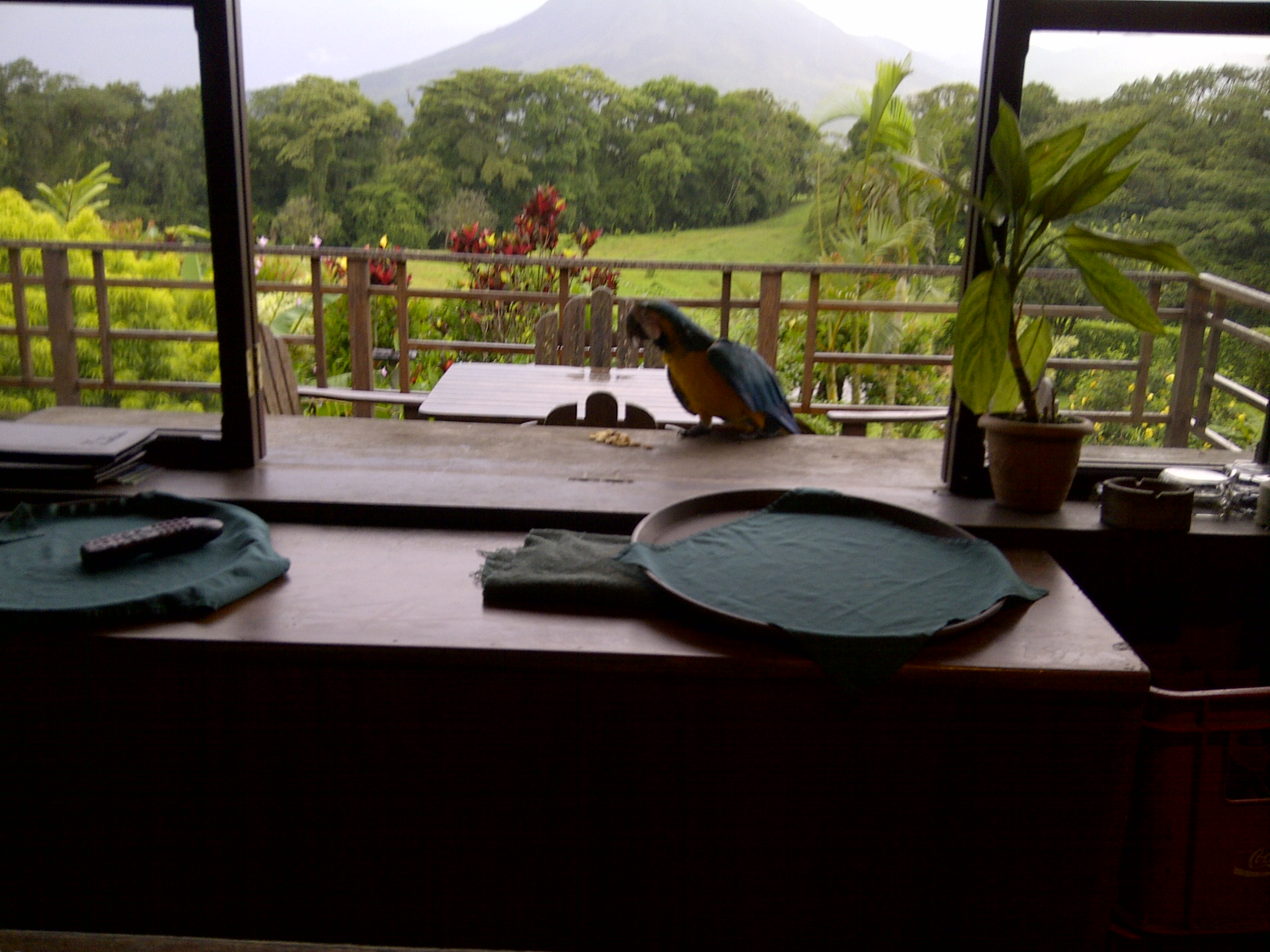
 view from our balcony
 rob, megan, playing chess in the lobby, which is completely open to the elements
This 2,000 acres encompasses a magnificent rain forest replete with howler monkeys, bats, sloths, hummingbirds, deer, and a lone macaw, Stephanie, whose story is for another post. There are more types of frogs and butterflies than we’ve ever seen in one location. In fact, Costa Rica has more biodiversity than nearly every other country in the world. It’s the home of 500,000 species, four percent of the total species in the world.
From dusk to dawn, nature’s orchestra is continual, a cacophony of insects and frogs so lovely and powerful that it permeates your very being.
 Arenal frog, major part of nature’s orchestra
Intimately woven throughout this orchestra are the details that awaken your other senses. The lushness of the landscape is apparent even at night – in the air you breathe, the taste of it against your tongue, the way it feels against your skin. The Angel Trumpets surrounding one of the ponds sway and dance in the moonlight, promising hallucinogenic dreams to those who sleep nearby.
Then there’s the starkness of Arenal volcano rising against all this abundance, jutting upward more than a mile, as if reaching for something within the belly of the sky. It dominates the landscape at every moment of the day and seems to shout, I am here, timeless and invincible.
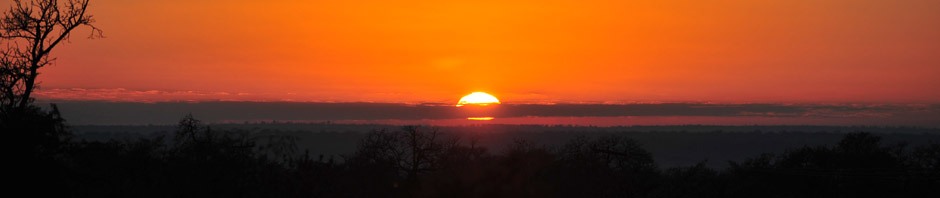
It last erupted in 1968, buried several towns, and continues to spout ash and smoke. Even though it was quiet during our stay, I woke suddenly one night, bolted upright, and there it was, framed in the open porch door. Smoke curled upward from its cone, inscribing secrets against the stars.
Now: if only I can decipher all these secrets.