In the late 1980s, before Megan was born, my parents, Rob and I went over to my sister’s place for dinner. The house actually belonged to her husband – now ex-hubby – and during dinner, we talked about past-life hypnotic regression. My sister’s husband thought it was all pretty silly, but my dad was intrigued and wanted to try it. I think my mother went along with it because of my dad. So after dinner, Rob, my parents, and I went into another room.
My parents and I stretched out on the rug and, with Rob as our hypnotist, went through a deep relaxation. Rob’s voice is pitch perfect for this, quiet yet firm, and he led us through ever deeper levels of relaxation. At some point – I’m not sure when – my mother left, but my dad and I didn’t move.
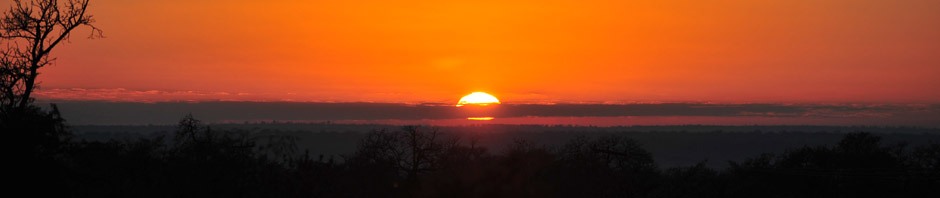
Rob took us up to a door we were supposed to walk through, into a past life that held relevance to this life. I don’t recall walking through the door, but suddenly found myself on a dusty road, walking alongside wagons with heavy wooden wheels, beneath the glare of twin suns. I remember how the brilliant light practically washed out my shadow on the ground. I remember how dry the air smelled. I remembered thinking, OK, this is weird, where am I? And then I came out of it.
My dad was slowly sitting up. I looked at Rob. “How long?”
“Maybe thirty minutes,” he said.
“I saw myself walking along a road with wooden wagons,” my dad suddenly said. “And there were twin suns in the sky.”
I nearly swallowed my tongue. “I saw twin suns too!”
And just then, someone entered the room and we were interrupted and then joined the others. That scenario has always haunted me. How could my dad and I see the same images? And where was this place with the twin suns? I figured it was some other civilization in a parallel universe or on another planet and that maybe I had lived there.
I also thought it would make an interesting premise for a novel. And that’s why I’m skeptical about images like this. It might be my muse, working overtime.
But this evening, I was writing a section in the sequel to Esperanza about twin suns. I took a break and clicked on
huffington post and saw an article entitled
Two Suns? The photo you see when you click the link is exactly what I saw the night of the hypnosis. Even their positions in the sky are identical to what I saw. Synchro, right? But then it gets stranger.
Those twins suns depicted in the article are how our sky would look to us if Betelgeuse, which is losing mass, went super-nova. This is when a star, you know, collapses. According to Dr. Brad Carter, Senior Lecturer of Physics at the University of Southern Queensland, the sky would look like this for several weeks. And during this time, there might not be any darkness. No night-time.
“The Star Wars-esque scenario could happen by 2012,” Carter says. Or maybe a lot farther out in time than that. As the article points out, this explosion could cause a neutron star, which is what’s created when the core of a massive star is compressed during a supernova, or “could also result in the formation of a black hole 1300 light years from Earth.”
So now I can’t help but wonder if this is the scenario my dad and I saw – not a past life, but a future event. But where in the future?
Carter says that if Betelgeuse went nova, earth would be deluged with particles that hold all but one percent of the nova’s released energy. These particles would pass through the earth and our bodies without any harm whatsoever.
Here’s the original article.
Other than the synchronicity, which holds meaning for me, I’m not sure what to make of this. But this is the first time in the 20 plus years since that regression that I’ve seen an image that’s identical to what I remember. The fact that I find the article within minutes of working on a scene in which twin suns are mentioned, suggests there’s something to it. And clusters of 2s may be important. It’ll be interesting to see where this one leads or whether a synchro has simply come full circle.